
Is blogging for authors still worth it today? From my experience running a writing and publishing blog for many years, the answer isn’t a simple yes or no.
What works now is very different from just a few years ago, mainly because of the rise of artificial intelligence (AI) in writing and search.
If you’d asked me in 2020, my answer would have been, yes definitely have a blog. But today, authors are at the forefront of change, and the new AI challenges apply equally to book writing and blogging.
However, if your passion is writing, blogging is still alive and still a great way to hone your writing skills and connect with readers.
If you plan to start a blog, test the waters first and avoid anything complicated or expensive.
The most popular free platforms for authors include WordPress.com, Blogger, Wix, and Medium. All of them let you publish quickly without worrying about the cost of hosting or overly technical setup.
Free platforms like these are great for getting your writing out there and building a small audience while you figure out how things work.
While it might be tempting to have all the bells and whistles, avoid investing in a custom site, paid hosting, and premium plugins. Find your feet first.
Select one platform and get comfortable with it before considering any investment or upgrades.
Focus all your energy on learning how to set up and manage a blog, correct formatting, and create consistent, quality content that reflects your writing voice and interests.
Think of your new blog as your practice space or sandbox for your writing, rather than a business you need to launch immediately.
Posting regularly, even if it’s only once a week, is more important than having a shiny, polished site.
Once you find your routine and hopefully new readers, you can then think about moving to a self-hosted setup or investing in extra features.
Starting small is the best way because it keeps the process easy and enjoyable, and helps you focus on what really matters: your writing.
Common blogging mistakes to avoid
One of the biggest mistakes new authors make is using a blog as a “mind dump”.
The days of random thoughts are well and truly over in blogging. The only way to succeed now is to become known as an expert in a niche topic.
Yes, all authors write books, but book writing is a very broad topic and unlikely to attract a lot of readers.
A better approach is to narrow your focus to a niche that you enjoy writing about and have experience and expertise you can share.
For example, you could choose period romance writing, historical fiction, or world-building.
Topic focus is very important now because search engines are looking for consistency, authority, and value in search results.
It is one of the reasons why starting with a free platform is the best route to take, because it will take time for you to find your strongest niche topic.
Another common mistake is poor formatting in blog posts.
A huge chunk of text filling a reader’s screen is an instant turnoff. Learn how to use headings and images to break up a long text for screen reading.
It can also be tempting to write epic, long blog posts. But quantity doesn’t always equal quality reading.
You need to find your sweet spot for your online writing. It’s usually somewhere between 800 and 1,500 words for most popular blogs.
While it’s a very good idea to look at many author blogs for ideas before you begin, don’t fall into the trap of trying to copy or emulate another site.
With a free platform, you will be limited a little by what features or design elements you have. But learning how to use what you have well is a great way to improve your blogging and site management skills.
But the biggest mistake of all is giving up too early. Blogging takes time, patience, and persistence, and there are no magic shortcuts.
Any of the free blog and website builders make it easy for authors to have a website.
It might take a few days or even weeks of work to build an attractive site. But once you create your front page, book pages, about page, and add a contact form, that’s it.
You might also want to add a page with your events and news, and keep it updated. It will only take a few minutes from time to time to add your updates.
Some of the free website services allow you to buy a domain name for a small fee. It doesn’t help you with SEO (search engine optimization), but you can get a URL address that is more memorable for your readers.
With a static website, you have your point of presence. You can use it with your social media marketing or with other book promotion activities.
Yes, you can easily add a blog section to a website. But then you need to write new blog posts regularly. If you don’t, your website will begin to look outdated very quickly.
Unlike the pages on your website, blog posts have a published date. If a visitor notices that your last post was a year ago, it may seem that you have given up on writing books.
Many new authors think blogging is a necessity.
It’s not.
Writing a book takes a long time.
But writing regular blog posts and articles is time-consuming and an ongoing commitment.
Yes, regular blogging can be beneficial for authors. It can certainly help attract new readers and perhaps build a mailing list.
With a little SEO, you can perhaps attract new readers. However, you need to be sure that you will have the time available to write books and maintain a blog.
Blogging is not only about writing and publishing a few articles each month. You also need to react to comments, answer questions, promote your articles, and maintain your site security.
For an author, blogging can quickly become a time hog that will eat into the writing time you need to finish a book.
Do you have the time to do both?
If you are not sure, wait before you start a blog. You can always change your mind later.
Promote your books or your blog?
You want to sell books.
There are so many ways that you can advertise and promote your books without a blog.
However, if you want to use your author blog as your primary book marketing tool, you will need to promote it aggressively.
It is a method that many authors use.
The upside to this approach is that you can develop your blog to do more than promote your books.
You can add extra income potential with affiliate marketing and advertising.
This can be an attractive option for authors because it can help offset the ups and downs of book royalty income.
Monetizing a blog has advantages
The only problem is that it takes time, hard work, and patience to succeed.
As a general rule of thumb, it can take one or even two years to establish a good search engine ranking.
It rarely works with a free website, so it usually means moving to a self-hosted WordPress blog.
For a lot of authors who do this, it is a point when writing books can become secondary to being a blogger.
When you compare the income cycles of books and blogs, you can see why.
The typical sales and income cycle for a book is strong after launch and then tails off to a trickle.
So you have to publish books regularly to maintain your income.
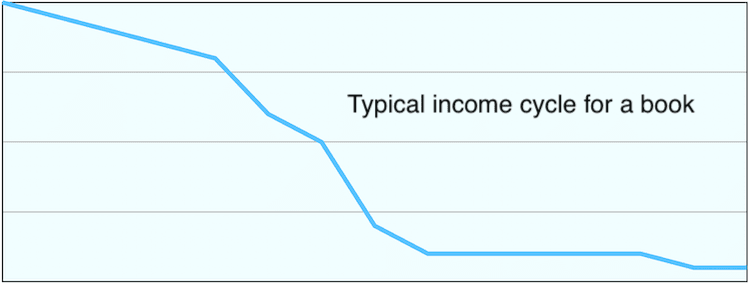
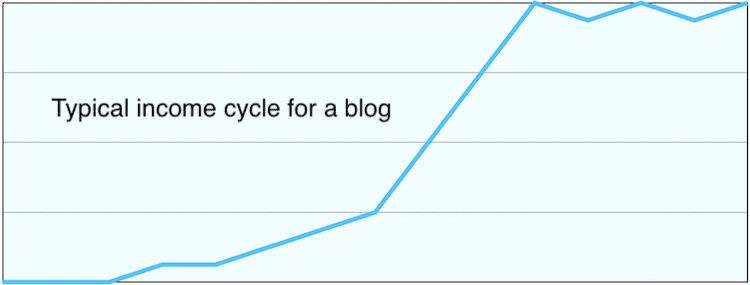
But for a monetized blog, it works in reverse.
The big difference is that a blog starts very slowly. It can take up to a year to start earning any income at all.
But once established, it will continue to earn money every month.
Being a writer and making an income from your writing is not an easy occupation. Relying on one income source can be problematic.
That’s why being an author and a pro blogger is advantageous. But it’s certainly not for every author.
Don’t rush into blogging, thinking that it’s one of the things an author needs to do.
It’s a choice and not a necessity. Ask yourself these questions before you decide.
Do you have the time to commit to writing regular blog posts?
Do you have a topic or topics that you can keep writing about for years to come?
Will your blog help you sell more books than a website and free and paid book promotion?
Do you have the computer and technical skills to maintain an active blog?
If you can say yes to these four questions, then blogging might be for you.
Just remember that an abandoned blog is worse than no blog at all.
Once you start a blog, links to and from it will be crawled by search engines.
You might not rank highly on Google or Bing, but these links will remain for a long time. They will also stay on social media.
If a visitor arrives from one of these links and your blog is abandoned, it can only harm your chances of selling books.
Even if you delete your blog, the links will remain active and lead to a 404 error.
That’s why it’s a big decision to start a blog.
You have probably visited a lot of author blogs. Many of them are great resources for writers and authors.
If you believe you have the expertise and knowledge on specific topics and subjects that are worth sharing, then you can do the same.
But before you jump in, consider the following positives and negatives.
The pros of blogging
Connect with your readers through comments and a mailing list
Broaden your book promotion with great content
Become a recognized expert on a topic
Gain traction and more traffic through search engine indexing
The possibility of earning more income with affiliate marketing and PPC advertising
Use automation to share your content on the web and social media
The cons of blogging
Very time-consuming
A long-term commitment
A long learning curve with a self-hosted blog
Takes a long time to rank on Google search
Needs regular maintenance and updating
Can require the services of a developer as you grow
Summary
For authors, blogging is a promotional tool that needs a lot of consideration.
There are many other ways to promote and market books that are less time-consuming.
If you are looking at supplementing your writing income, it’s a different story.
A successfully monetized blog can deliver a reliable and consistent income over the long term.
You need to be patient and work hard at it in the beginning. Many give up after a few months.
But if you are prepared to learn and develop the skills you need and invest a little in your blog, the rewards will come.
Related reading: Turn Your Blog Posts Into An Ebook For Profit Or Promotion

English teacher, writer, and author. Passionate about grammar, creative writing, and self-publishing. Always exploring new tools and tech to help writers succeed.



Hi,
I suffer from anxiety/depression and I want to start a blog chronicling daily life with mental health. I’ve written a few pieces, but I’m wondering would it be hard to start a blog and would be worth it? Would people respond to it?
A blog is always worthwhile, Anne. But note that it can take up to a year for a new blog to gain any traction or organic traffic. If you’re patient, however, you can find readers.
Derek, I am facing the same difficulties which you mention in the Cons of blogging. I have put of 4 of them but posting articles in slow process with lack of really good content which also has SEO potential. Thanks for this.
Great share from you Derek. I will have to check for you on Social. I love how you spoke on everything and was also able to include a lot about your interest and sharing you were an Author is a plus. Great work and advise.
I have been blogging for a while now and the majority of comments are spam that I have to trash. So I don’t seem to be reaching anyone.
I tweet and Facebook my blogs but no one seems to be interested in what I have to say. (sob sob)
I have followers on Twitter but receive few likes or re-tweets
I try to utilize all your advice and the advice by others on how to attract readers to no avail.
It is very discouraging to be a blogger/writer/author no one wants to read
Paid advertising makes no dent. memberships on other website makes no difference.
I guess I just have to accept that I am out of synch with the reading world